Home › Road, Street, and Municipal Paving
We handle road paving in Corpus Christi, TX for subdivision streets, access roads, and municipal projects. Our experienced crews manage grading, base work, asphalt placement, and compaction to meet engineering specs and timelines. From new construction to overlays on existing streets, we deliver smooth, durable asphalt surfaces that stand up to daily traffic.
Precision Asphalt Corpus Christi provides professional road paving throughout Corpus Christi, TX, Texas and the surrounding area. Our licensed, insured crew delivers safe, clean, on-time work with a free estimate before anything begins. Call (361) 266-1487 or request your free quote.
Road, Street, and Municipal Paving in Corpus Christi
Road paving in Corpus Christi is not a one-size-fits-all job. Our streets see heavy refinery traffic, salt air from the bay, and intense summer heat, so a road that might last 20 years in a cooler climate can start showing problems much sooner here if it is not built correctly.
Precision Asphalt Corpus Christi focuses on municipal, county, and private-road projects inside and around the city, from neighborhood streets off Staples and Saratoga to industrial access roads near the Port of Corpus Christi. We work directly with city departments, HOAs, developers, school districts, and commercial property owners to design pavement that stands up to trucks, buses, and constant UV exposure.
When you call us for road paving, we are not just showing up with a paving machine. We look at drainage patterns, existing soil conditions, traffic volume and type, and tie-ins to existing streets. A light-duty residential subdivision lane with pickup trucks and garbage trucks needs a different section design than a bus route near a school or a haul road serving a warehouse park on the outskirts of town.
How the Road Paving Process Works (Step by Step)
A successful street or municipal paving job starts well before asphalt hits the ground. Precision Asphalt Corpus Christi follows a clear process so your project stays predictable and compliant with local standards.
1. Site review and evaluation: We walk and drive the route to document existing conditions. We check for soft spots, standing water, utility covers, curb and gutter condition, and existing pavement thickness where applicable. In areas like Flour Bluff or older parts of Corpus where soil can be weak or previously disturbed, we pay special attention to subgrade stability.
2. Design and thickness recommendations: Based on traffic loading (cars only, mix of cars and delivery trucks, or heavy truck routes), we recommend asphalt layer thicknesses and base structure. For example, a lightly traveled residential street may use 2 inches of surface over 4 to 6 inches of base, while a collector or bus route may require 3 inches or more of asphalt over a thicker stabilized base. If you already have engineer plans, we build to spec and coordinate with your engineer.
3. Subgrade preparation: If we are building a new road, we shape and compact the native soil to city or county requirements, often 95 percent compaction or higher. Soft or pumping spots are undercut and replaced with select fill or crushed rock. On reconstructions, we may reclaim existing pavement and base, then re-compact it to create a strong, uniform base layer.
4. Base installation and proof-rolling: We install base material, commonly crushed limestone or flexible base, shape crown or cross slope for drainage, then compact with steel drum and pneumatic rollers. Proof-rolling with a loaded truck or roller helps identify weak areas that need correction before asphalt goes down.
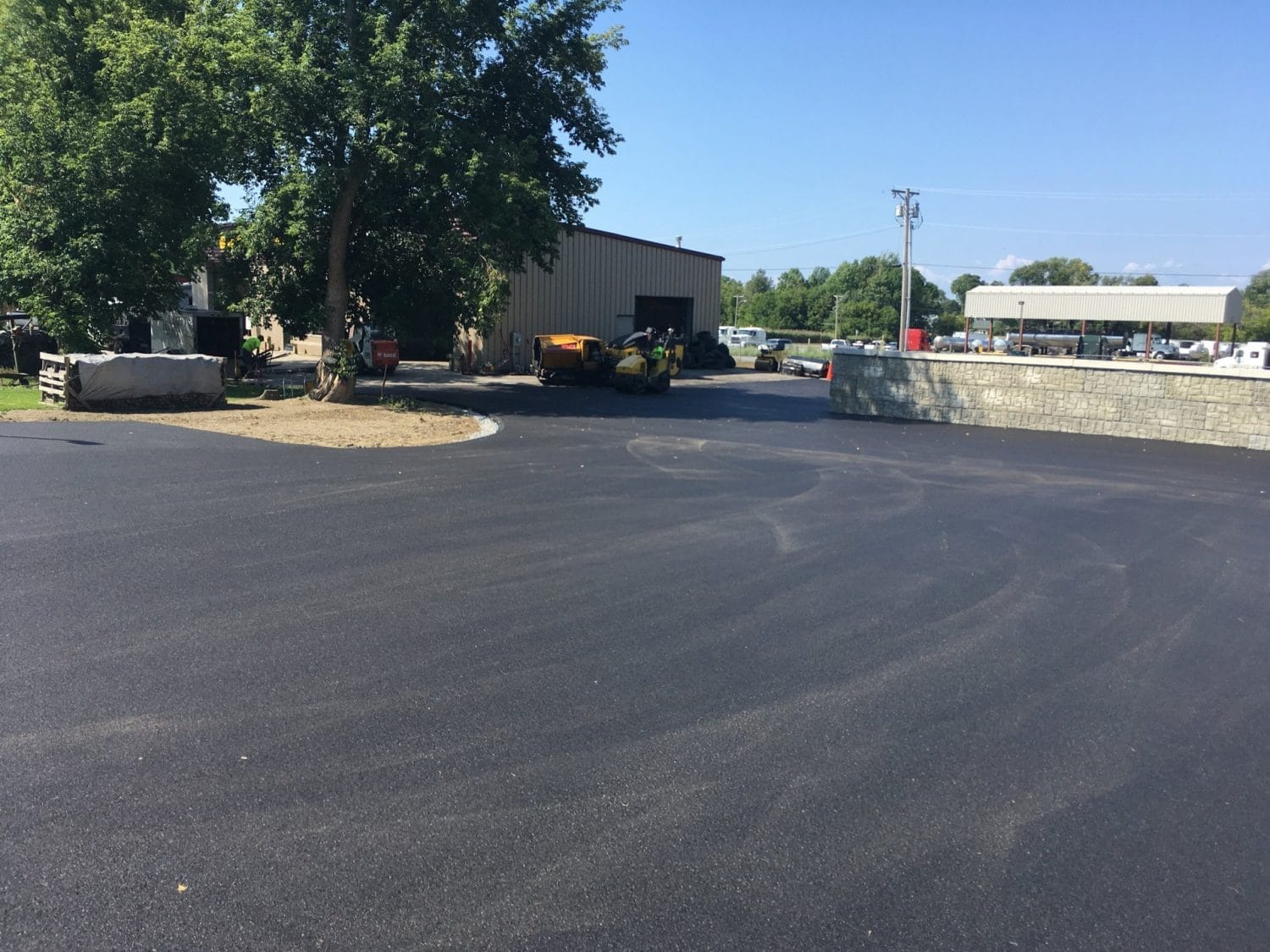
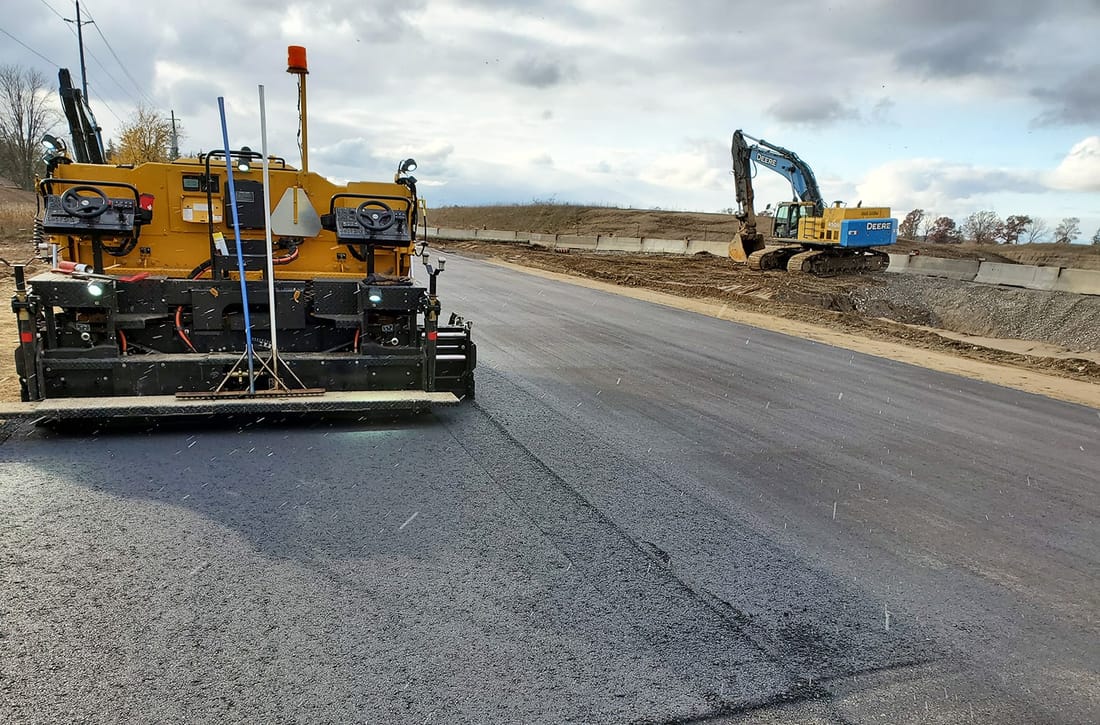
5. Asphalt paving: We bring in hot mix asphalt from local Corpus Christi plants, coordinate delivery timing to avoid temperature loss, and place it with a paver in one or more lifts. Each lift is compacted while the mix is at proper temperature using multiple passes of steel and pneumatic rollers. Joints are staggered and carefully compacted so they do not become weak lines that crack early.
6. Tie-ins, striping, and final checks: We adjust manholes, valve boxes, and inlets to final grade, seal joints where needed, and install pavement markings and signage if they are part of the scope. Before we turn the road over, we verify drainage, check smoothness and slope, and walk the project with you or your inspector to confirm punch list items.
Materials, Mixes, and Local Conditions that Affect Your Road
Not every asphalt mix works well in Corpus Christi. The combination of high heat, occasional flooding rain, and salt in the air can punish poorly selected materials. Precision Asphalt Corpus Christi works with local asphalt plants to choose mixes that meet city and TxDOT standards and also match the real-world use of your road.
For residential streets, we typically use a dense-graded hot mix that provides a smooth ride, resists rutting from parked vehicles, and can be crack sealed and overlaid when it reaches the end of its service life. For industrial or port-related routes where trucks turn frequently and sit loaded at stop signs, we may recommend a stiffer binder grade or slightly modified mix to reduce shoving and rutting at intersections and loading areas.
Base material selection matters just as much as the asphalt on top. In some parts of Corpus Christi, especially near the bay or in low-lying neighborhoods, soils can be saturated or expansive. In those locations, we may propose lime or cement treatment of subgrade to lock it in place, or an upgraded base rock thickness to prevent long-term settlement and alligator cracking.
Drainage is a constant concern here, because short, intense storms can put a lot of water on the pavement in a hurry. During design and layout, we look at gutter lines, inlets, and side ditches to maintain consistent cross slope and avoid flat spots where water sits. Slight changes in crown or the addition of a valley gutter in problem spots can extend pavement life and reduce potholes.
When you understand how mix type, base design, and drainage interact, it becomes easier to see why two streets that look similar on the surface might age very differently. Our goal is to explain those trade-offs in plain language so you can choose a pavement structure that fits your budget and your traffic needs without surprise maintenance costs a few years down the line.
Costs, Bids, and How We Control Budget Surprises
Road paving costs in Corpus Christi are driven by a few main factors: pavement thickness, base requirements, project size, existing conditions, and traffic control needs. Precision Asphalt Corpus Christi breaks these pieces out clearly so you see where your money is going.
Thickness and structure: More asphalt and more base means more material and hauling cost. A small change in thickness across a long street segment can add up quickly. We work with owners and engineers to target thickness where it is most needed, for example, at intersections and bus stops, and avoid overbuilding very lightly loaded segments.
Existing pavement condition: Mill and overlay is usually cheaper than full reconstruction, but it only makes sense if the existing base and subgrade are sound. On older Corpus neighborhoods with numerous patches and utility cuts, or where we see widespread base failure, we will show you the long-term cost comparison between a thicker overlay with underdrain improvements and a full-depth rebuild so you are not throwing good money on top of bad material.
Project size and layout: A single cul-de-sac or short access road can have a higher per-square-yard cost than a long, continuous road, because mobilization, equipment, and traffic control spread over fewer yards. We look for logical phasing and grouping so that if you have multiple streets, alleys, or drive lanes, we can schedule them together and give a better unit price.
Traffic control and coordination: City streets, school zones, and busy commercial corridors often require lane closures, flaggers, and after-hours or weekend work. Those items add cost, but we minimize them by tight scheduling and clear communication with residents and businesses. We provide realistic schedule windows, notify affected properties when access will be limited, and, where possible, leave at least one lane open or temporary access to driveways.
Before you sign a contract, we encourage a site walk with our estimator. We point out any risks such as soft shoulders, old utilities just under the surface, or poor drainage that might lead to change orders, and we price in reasonable contingencies so your final cost stays close to the original proposal.
Common Road Problems Here and How We Fix or Prevent Them
Corpus Christi streets tend to show a few recurring issues: reflective cracking from old pavements, rutting at stop locations, edge failures where shoulders are soft, and potholes that follow poorly compacted utility trench repairs. Precision Asphalt Corpus Christi tackles each of these with specific methods rather than a one-size-fits-all patch.
For roads with existing cracks that keep telegraphing through new overlays, we may use a combination of milling, crack cleaning and sealing, and in some cases a leveling course or fabric interlayer before the final surface lift. This reduces reflective cracking and helps your new surface last closer to its full design life.
Rutting at bus stops, intersections, and port-related truck routes is often tied to thin asphalt or weak base. Where budgets permit, we recommend thicker asphalt or upgraded base in these wheel path zones, even if the rest of the street uses a standard section. On rehabilitation projects, we sometimes selectively mill deeper in those high-stress areas and rebuild with stronger material rather than treating the entire corridor the same way.
Edge failures and crumbling shoulders are common on narrow neighborhood streets and rural lanes where drivers pull off the pavement. We address this by improving shoulder support with additional base, widening where right-of-way allows, and using proper compaction right up to the edge of pavement. On new builds, we talk with owners about expected parking habits so we can design edges that will actually be used.
For potholes that keep returning after utility cuts, we coordinate with utility contractors or city departments to ensure trenches are compacted in lifts and repaired with compatible materials. Where patterns of settlement exist along a line of old utilities, we may recommend sectional reconstruction, not just spot patches, so you are not paying for the same repair every rainy season.
If you are responsible for a subdivision, private community, or commercial park in Corpus Christi, we can also set up a simple pavement management plan. This outlines when to seal cracks, when to consider thin overlays, and when to plan for full reconstruction, which helps you budget years in advance instead of reacting to emergency failures.