Home › Commercial Gravel-to-Asphalt Conversions
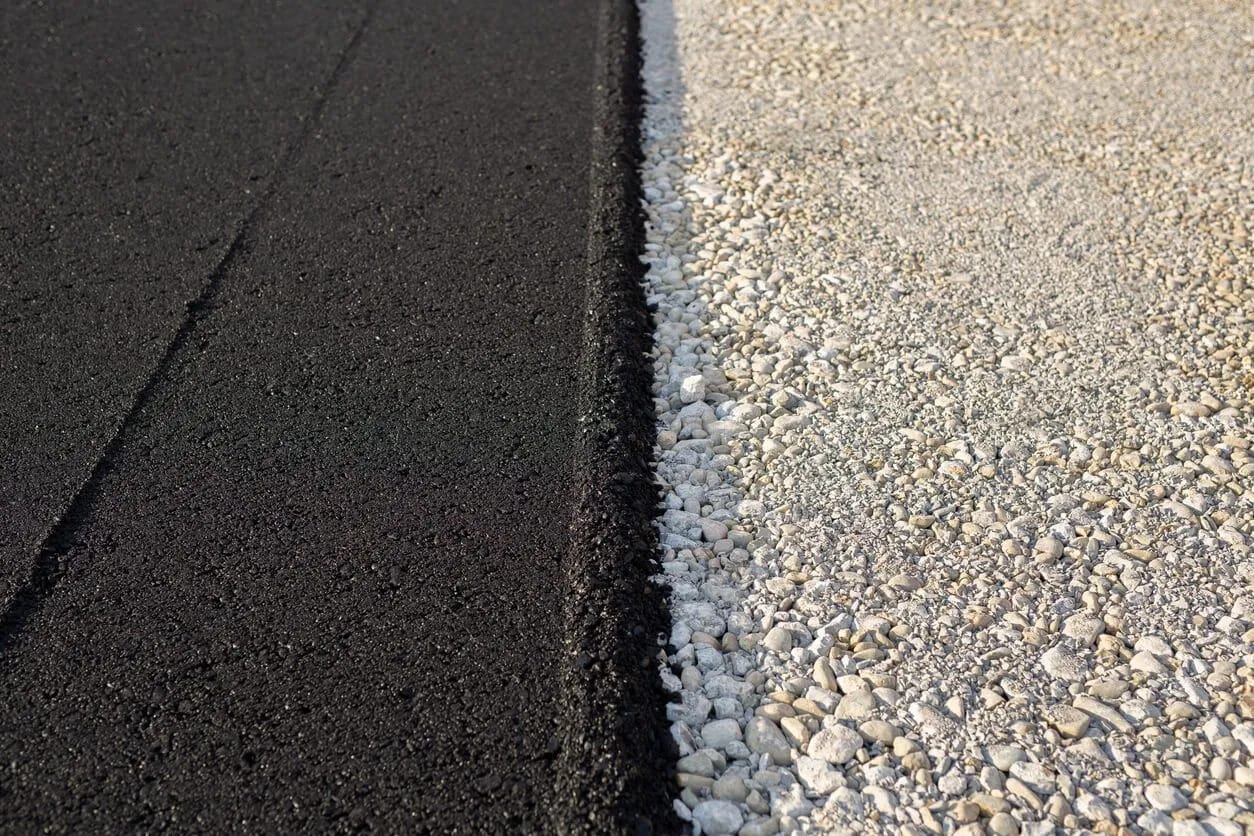
Our commercial gravel to asphalt service in Corpus Christi, TX upgrades dusty, uneven lots and drives to clean blacktop that is easier to maintain. We rework and compact the existing aggregate, correct drainage, then pave a new asphalt surface sized for your traffic. The result is a more professional appearance, less dust and mud, and better access for customers and trucks.
Precision Asphalt Corpus Christi provides professional commercial gravel to asphalt throughout Corpus Christi, TX, Texas and the surrounding area. Our licensed, insured crew delivers safe, clean, on-time work with a free estimate before anything begins. Call (361) 266-1487 or request your free quote.
Turn Your Gravel Lot Into a Professional Asphalt Surface
If your commercial property in Corpus Christi is still using a gravel lot, you already know the headaches: dust blowing onto storefront windows, potholes that get worse after every rain, and customers trying not to twist an ankle on loose rock. Precision Asphalt Corpus Christi helps local businesses move past those issues with practical, well-planned commercial gravel to asphalt conversions that fit the way your site is actually used.
We start by walking your property with you. For a shopping center, we look closely at traffic patterns near entrances, loading zones, and the busiest parking rows. For industrial yards, we pay attention to heavy truck turning paths, where forklifts cross, and where standing water tends to collect after coastal storms. This early walkthrough is where we catch problems that a quick “measure and pave” contractor will miss, like soft subgrade near drainage ditches or gravel that was never properly compacted when the lot was first built.
During this consultation we also discuss how you want the lot to look and function. Do you need clearly marked fire lanes for inspections from Corpus Christi Fire Department, extra-wide accessible parking near the front doors to satisfy TDLR requirements, or designated spaces for delivery vehicles? By the time we leave, you will know whether your existing gravel base can be reused, what drainage changes might be needed, and what kind of asphalt section makes sense for your budget and traffic loads.
Step-by-step: How Gravel Becomes Asphalt on a Commercial Site
Converting gravel to asphalt is more than just laying blacktop over rocks. For Corpus Christi properties, coastal soils and intense summer rains mean we must get the foundation right. Precision Asphalt Corpus Christi follows a clear, repeatable process so your new pavement does not fail in a couple of years.
First, we strip and rework the existing gravel. Using graders and compactors, we shape the lot to create consistent slopes toward planned drainage points, usually between 1 and 2 percent. Any soft or pumping areas, often found near old utility trenches or low spots, are undercut and replaced with select fill or additional base material. On industrial sites where loaded trucks park overnight, we typically recommend adding more crushed limestone base and compacting in multiple lifts to reach a strong, uniform platform.
Next, we compact the base to the required density. This is not guesswork. Our crew checks firmness by making several passes with vibratory rollers and, when specified, performing field density tests. If the base moves, ruts, or sheds rocks under the roller, we correct that before any asphalt touches the ground.
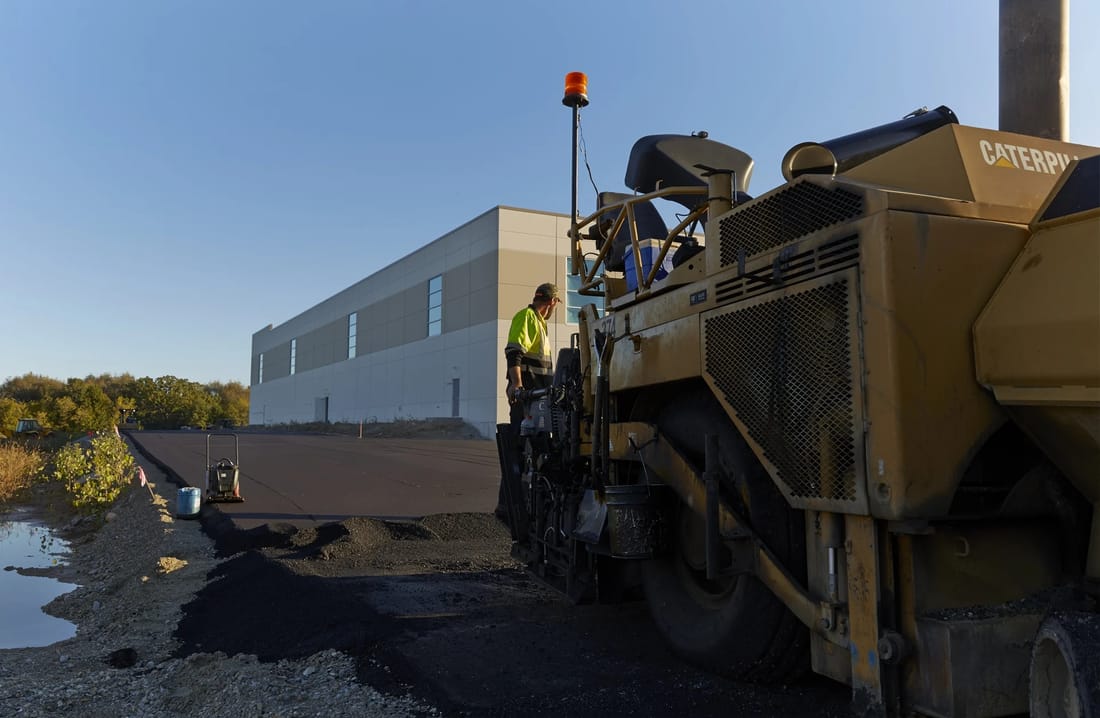
After the base is approved, we install the asphalt in one or two lifts depending on use. For light duty commercial parking (office or retail), we commonly install 3 inches of hot mix asphalt, compacted, in a single lift. For loading docks and truck traffic, we may place a stronger base course asphalt plus a surface course. The hot mix is brought from a local plant, placed while still at proper temperature, and compacted with steel drum and pneumatic rollers to lock the aggregate together. Edges are neatly formed so they transition cleanly to sidewalks, concrete approaches, or existing streets.
Finally, once the asphalt has cooled and cured enough for marking, we lay out and stripe parking stalls, fire lanes, ADA accessible spaces, and directional arrows. If you need wheel stops, signage posts, or bollards, we plan and install those so that the finished lot works smoothly for both drivers and pedestrians.
Design Options, Drainage, and Local Weather Considerations
A well designed commercial gravel to asphalt conversion must reflect how Corpus Christi weather treats pavement. Our area sees intense sun, sudden thunderstorms, and occasional tropical systems, all of which punish poorly drained lots.
Drainage is the first design priority. Gravel lots sometimes hide minor ponding because water can soak into the surface. Once you pave, those same low spots can turn into large puddles that weaken asphalt and create slip hazards. We use laser levels to regrade so that water moves toward inlets, swales, or the street, and we recommend new or upgraded area drains in chronic problem spots. If the soil underneath is particularly clayey, which is common in some Corpus Christi neighborhoods, we may suggest geotextile fabric between subgrade and base to reduce mixing and future rutting.
For traffic loading, we match asphalt thickness and base depth to real use rather than a one size fits all template. A small medical office lot with mostly cars can stay cost effective with a moderate asphalt section. A seafood distributor on the port side with frequent reefer trucks needs a much stronger section or even reinforced truck lanes. We talk through worst case loads with you so you know where you can safely save money and where cutting corners would be a mistake.
You also have options for the finish and markings. We can include high reflectivity striping for better night visibility along SPID or Leopard Street, add crosswalks near building entrances, and create painted loading zones to keep fire lanes clear during inspections. For businesses that run 24 hours, we can plan phased work and temporary gravel or asphalt ramps so your operation never fully shuts down.
Because coastal UV exposure is intense, many commercial clients schedule sealcoating a year or two after the initial install to slow aging. While sealcoat is not applied during the conversion itself, we design your lot so it can be sealed and restriped easily in the future without disrupting drainage or traffic flow.
Costs, Timelines, and Common Issues We Solve
Budget and scheduling matter on any commercial project, especially when closing a lot affects customers or operations. Precision Asphalt Corpus Christi is straightforward about what drives the cost of a commercial gravel to asphalt conversion and how long you can expect the work to take.
Major cost factors include total square footage, existing base condition, required asphalt thickness, drainage improvements, and site access. Wide open shopping center lots with decent gravel base are usually simpler and less expensive per square foot. Older industrial yards with deep ruts, standing water, or poor access for trucks can require more excavation and base rebuild, which increases both material and labor costs.
For timing, most mid sized commercial lots can be converted within a few days to a week once permits, if required, are in place. We often phase work so you can keep part of the lot open. For example, at an active retail center we might handle the back employee parking and side areas first, then tackle customer parking in sections during off peak hours or early mornings. The heat in Corpus Christi actually helps asphalt curing, but we plan around peak afternoon temperatures to keep material workable and compaction quality high.
Common issues during these projects include discovering soft subgrade below what looked like solid gravel, hidden utility lines that affect grading, or poor drainage that only shows up after a rainfall. We address these by discussing options with you in real time. If we find a weak area, we can undercut and rebuild just that section instead of the whole lot. If drainage is marginal, we can show you the cost and benefit of adding an inlet or adjusting slopes while we are still on site.
Our goal is that you know in advance where surprises are most likely and what your contingency options are, rather than facing change orders with no context. We encourage clients to budget a small percentage for unforeseen conditions, especially on older gravel lots that have been patched and reworked many times over the years.
What Corpus Christi Property Owners Should Ask Before Converting Gravel to Asphalt
Before you commit to a commercial gravel to asphalt conversion, it helps to know what to ask potential contractors. Precision Asphalt Corpus Christi is happy to walk through these questions with you so you can compare bids fairly.
First, ask how the contractor evaluates the existing gravel base. If the answer is simply “we roll it and see,” that is a red flag. You want someone who talks about checking thickness, moisture, and subgrade stability, and who is willing to rebuild weak areas instead of paving over them.
Second, ask for a clear description of the asphalt section: total thickness, number of lifts, and where heavier duty pavement will be placed. A grocery store with a busy front drive and quieter back rows should not necessarily have the same design everywhere. Strategic reinforcement saves money while protecting high stress areas.
Third, ask how they plan to handle drainage. Get specifics: target slopes, whether any new inlets or swales are needed, and how they will tie into existing city or private systems. In Corpus Christi, where a single Gulf storm can dump inches of rain in an afternoon, this is not a minor detail.
Finally, discuss traffic control and business disruption. A good plan will include temporary signage, cones or barricades, and a phasing schedule that respects your busiest hours. We routinely coordinate with property managers, tenants, and delivery services so that everyone knows which areas are open on which days.
When you are ready to look at options for your property, we can meet on site, measure your existing gravel lot, talk through the way your business uses the space, and provide a written proposal that outlines the scope, materials, phasing, and pricing. That way you know what you are buying, how long it will take, and how long you can expect your new asphalt surface to last in Corpus Christi’s climate.