Home › Asphalt Resurfacing & Overlays
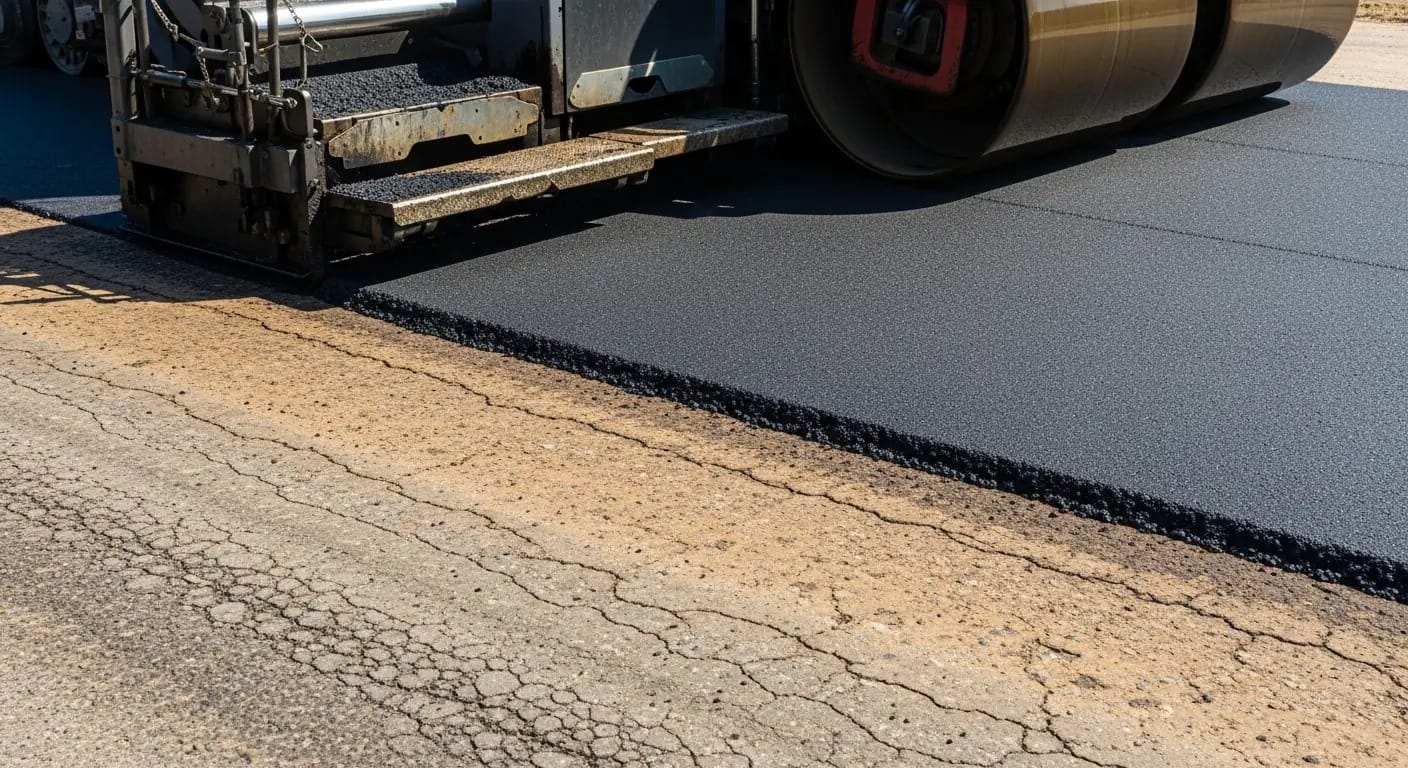
Our asphalt resurfacing in Corpus Christi, TX gives aging driveways a like new finish without the cost of full replacement. We repair major defects, then install a new asphalt overlay over your existing surface for a smooth, uniform look. This approach adds years of life to residential blacktop while improving appearance and ride quality.
Precision Asphalt Corpus Christi provides professional asphalt resurfacing throughout Corpus Christi, TX, Texas and the surrounding area. Our licensed, insured crew delivers safe, clean, on-time work with a free estimate before anything begins. Call (361) 266-1487 or request your free quote.
Asphalt Resurfacing & Overlays in Corpus Christi, TX
Asphalt resurfacing is often the most cost-effective way to restore a worn parking lot, driveway, or private road in Corpus Christi without tearing everything out. Instead of replacing the entire structure, Precision Asphalt Corpus Christi installs a new asphalt layer over your existing base, once we confirm that base is still sound.
This service is a good fit when you see widespread cracking, raveling, or weathering, but do not have major base failures or constant standing water across the site. In our coastal climate, UV exposure, salt in the air, and heavy summer rains take a toll on the top asphalt layer long before the rock base is completely ruined. Resurfacing and overlays target that worn surface so you get a new, smooth driving course while keeping the stable support underneath.
We use resurfacing on commercial parking lots, HOAs, small subdivisions, industrial yards, and residential driveways throughout Corpus Christi, Portland, Robstown, and nearby communities. Our focus is simple: verify what can be saved, repair what cannot, then install enough new asphalt to hold up to local traffic and weather instead of just throwing a thin cosmetic coat on top.
How We Evaluate Your Pavement Before Recommending an Overlay
Not every paved surface is a good candidate for an asphalt overlay. Before we give a price, Precision Asphalt Corpus Christi performs a site visit and a basic pavement assessment.
We start with visual inspection and mapping. We walk the entire area, mark cracking patterns, potholes, rutting, and low spots that collect water. Alligator cracking in isolated sections can often be repaired before resurfacing. Alligator cracking across most of the lot usually means the base has failed and a full reconstruction is more appropriate.
Next, we probe the existing base at selected locations. We may cut small cores or dig test pits at problem spots to see how thick the existing asphalt is and what kind of base material is under it. In Corpus Christi we often see caliche or cement-treated base under older parking lots. If that base is still firm and drains reasonably well, an overlay will hold. If it pumps water or collapses under a hand tamp or vehicle, the area needs base repair, not just new asphalt on top.
We also look closely at drainage. In our flat coastal terrain, even a small mistake in slope can trap water. If standing water is visible, or customers tell us puddles linger for days after a storm, we factor that into the design. Sometimes this means milling certain sections to reset slopes before laying new asphalt.
Only after this evaluation do we recommend asphalt resurfacing. If we do not think an overlay will last at least 8 to 15 years under your traffic, we will say so directly and explain your alternatives.
Our Asphalt Resurfacing & Overlay Process
When resurfacing is the right approach, Precision Asphalt Corpus Christi follows a defined process designed for our local soil and weather conditions.
1. Preparation and cleaning. We start by power sweeping and blowing the pavement so the new asphalt can bond properly. Oil spots are treated or removed. Loose aggregate and deteriorated patches are cleared out. Any vegetation on edges or in cracks is removed.
2. Structural repairs. Failed areas with deep alligator cracking, potholes, or base movement are cut out with a saw, excavated, and rebuilt with new base material. We compact these repairs in layers, then install and compact new asphalt flush with the existing surface. Resurfacing over unrepaired failures will cause the new overlay to crack again, so we address problems before we pave.
3. Leveling and milling. Where the surface has deep ruts, settled sections, or poor drainage, we may mill down the old asphalt or place a leveling course of new asphalt to smooth and correct slopes. In Corpus Christi, targeted milling around drains and drive approaches is common so existing elevations match after the overlay.
4. Tack coat. We apply an asphalt emulsion tack coat to ensure a strong bond between the old surface and the new overlay. Skipping or thinning this step may lower the upfront cost, but it dramatically shortens the life of the resurfacing.
5. Overlay installation. We typically install a new asphalt layer between 1.5 and 2.5 inches thick for parking areas, sometimes thicker for bus routes, heavy truck areas, or industrial sites. Mix design depends on use. For example, we may use a tighter, finer mix in retail parking to improve appearance and reduce tire noise, and a coarser, more stable mix in loading zones.
6. Compaction and finishing. Rollers compact the new asphalt while it is within the right temperature range. We use steel drum and pneumatic rollers as appropriate to achieve target density. Proper compaction is what makes the overlay resist rutting and fuel spills.
7. Striping and markings. After the asphalt has cooled, we re-stripe parking stalls, ADA spaces, crosswalks, and fire lanes according to city codes and your site plan. If you want layout changes such as improved traffic flow or more accessible parking, we incorporate that before striping.
Cost Factors for Asphalt Resurfacing in Corpus Christi
Resurfacing is almost always less expensive than full reconstruction, but it is still a significant investment. Precision Asphalt Corpus Christi explains what drives your price so you can see where your money is going.
Square footage and thickness are the biggest cost factors. More area means more material and labor. A 2 inch overlay uses roughly one third more asphalt than a 1.5 inch overlay, but in many commercial or heavy use areas the extra thickness is worth it for added lifespan.
The amount of base and patch repair needed can change the price more than the overlay itself. Cutting out and rebuilding failed sections requires more time, equipment, and material than simply paving over a sound base. However, skipping these repairs to keep the price low almost guarantees early cracking.
Access and phasing also matter. A straightforward open lot that can be closed for a full day or two is cheaper per square foot than a site that must stay partially open. If your business needs work done in phases to keep traffic moving, we plan staging, traffic control, and extra mobilizations into the estimate.
Drainage corrections and milling are additional variables. When we have to mill existing surfaces, adjust around inlets, or install new valley gutters or swales, the cost reflects that added work. In Corpus Christi we see many older lots with minimal slope, so sometimes improving drainage is the difference between a resurfacing that lasts a decade and one that fails in three years.
Material choices and timing also affect budget. Oil prices influence asphalt costs. Busy paving seasons in late spring and early summer sometimes come with higher material pricing and tighter schedules. If your project is flexible, we may suggest timing that balances cost and business disruption.
Local Considerations: Permits, Codes, and Coastal Conditions
Working in Corpus Christi comes with specific conditions that affect how resurfacing and overlays should be designed and installed.
Permits: For most straightforward mill and overlays on private property, the City of Corpus Christi does not require a full engineering plan, but work that changes access to public streets, modifies drainage patterns, or involves public sidewalks or right of way may need permits or city review. Precision Asphalt Corpus Christi coordinates with local regulations and can work with your engineer or property manager when submissions are required.
HOA and property management rules: Many neighborhoods, apartment communities, and shopping centers around Corpus Christi have rules on work hours, noise, trash, traffic control, and striping layouts. We regularly coordinate resurfacing schedules to minimize disruption to residents and tenants and can provide site maps, insurance certificates, and traffic plans when requested.
Climate: Our coastal heat, humidity, and salt exposure influence both the timing and materials for asphalt overlays. We avoid paving in conditions that are too cool or wet for proper compaction and bonding. We select mixes that handle high pavement temperatures and consider fuel resistance in areas with frequent spills, such as near loading docks or gas station drives.
Drainage and subsurface: Flat sites, clay subgrades, and occasional tropical rains mean your overlay must be designed with water movement in mind. We pay careful attention to slopes, transitions at inlets, and edge details along landscaped areas so surface water moves away from buildings and does not sit on the pavement.
What to Ask Before You Hire an Asphalt Resurfacing Contractor
Choosing the right contractor is the difference between an overlay that looks good for a year and one that performs for a decade or more. When you talk with Precision Asphalt Corpus Christi or any other contractor, here are specific questions you should ask.
1. How will you determine if my lot is suitable for resurfacing instead of full replacement? A solid answer should mention base evaluation, drainage review, and crack patterns, not just a quick drive-by.
2. What thickness of new asphalt are you proposing, and why? Be cautious of bids that only specify a vague "overlay" without a minimum compacted thickness.
3. How will you handle existing failures, low spots, and high-traffic areas? Listen for clear plans about patching, leveling courses, and possibly using different mixes or thicknesses in loading zones compared to general parking.
4. What is your approach to traffic control and business access during the project? For busy Corpus Christi properties, you want a phasing plan, not just a rough promise to "work around traffic."
5. Are striping, ADA markings, and any required fire lane markings included? Corpus Christi fire and building codes expect fire lanes and ADA spaces to be properly identified. Make sure these are explicitly part of the scope.
6. What is the expected lifespan of this resurfacing given my specific traffic and site conditions? Honest answers will vary depending on whether the surface sees light residential use or constant heavy trucks.
Precision Asphalt Corpus Christi is prepared to walk you through these points on site, show you where money should be spent and where it can be saved, and put all agreed details in writing so you know exactly what your asphalt resurfacing and overlay project will include.